
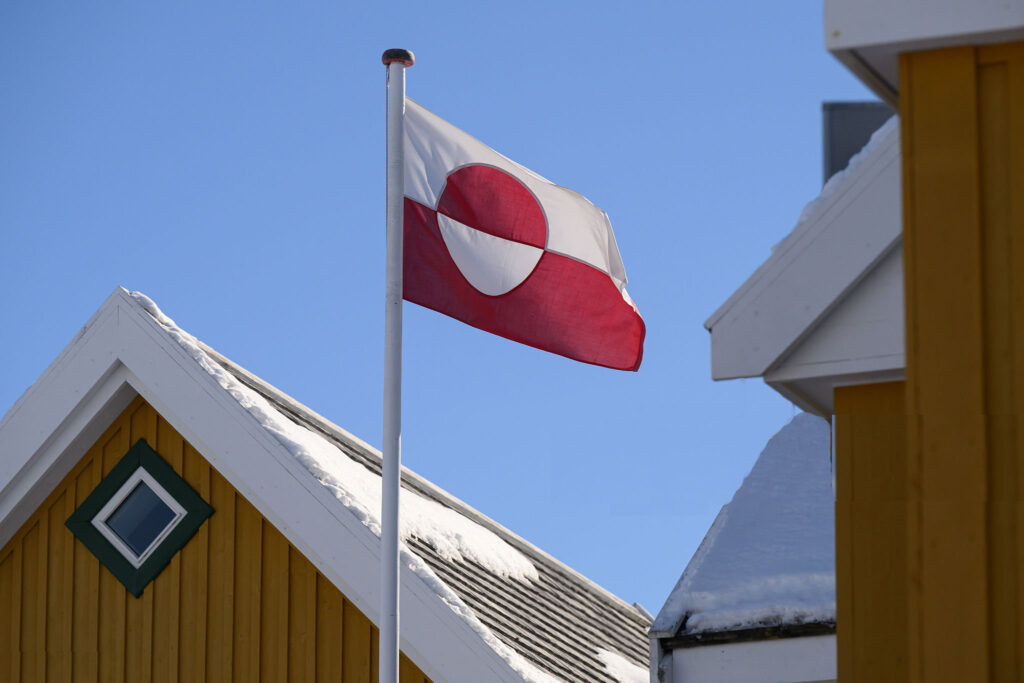
The strategic growth of Greenland is fuelled by climate change and competition among the alliances that redefine the regional trends into a new hub of power, pretty wild, cool, right? I refer to it as the retreat of the region because it shifts to the center of global power politics, and it is literally too much to swallow as a young student like me.
Greenland’s – only attempt to follow the course of geopolitics. Essentially, according to Costas Burns (yes, you read that correctly, this guy has a slightly fancy name), Arctic is no longer a back-seat player in the global strategy, but it is its star. Greenland has turned out to be the centrepiece in what is perceived as a new age of geopolitical competition. The high north low tension cold war atmosphere is dissolved, and currently we find the growth of NATO, mineral contests, climatic modifications, and the low-pressure and counter-pressure dynamic of giant nations.
It is all driving a reconsideration of the way regions are managed, the formation of alliances, and the wider distribution of global power. Greenland is at the centre of this new Arctic strategy. It is the semi-autonomous unit of Denmark, yet it has a huge sway on 21st-century geopolitics that is more than what we, as students reading smaller state politics,s can imagine.
It is strategic because of its country form and due to its wealth. The island is right in the middle of the Greenland-United Kingdom (GIUK) gulf- a military choke-point that is important in warning and anti-submarine actions. Due to this reason, Greenland supports the northside of NATO as well as its early-warning system of ballistic missiles.
The US even operated a space base there (Pituffik Space Base), which is absolutely indispensable to the defenses of the continent, and it is obviously a colossal pivot. It is not only about the geography. The process of global warming is literally melting the Arctic, which is warming four times quicker than the rest of the globe, and opening up the Arctic waters that were originally clogged with ice.
There has appeared new trade pathways and possibilities of the resources under thick ice have appeared. With the ice melting, the deposits of rare earth elements and other valuable minerals in Greenland all around the world. It also contains 25 of the 34 European set of most-important raw materials, that it is estimated has, electrics-car-powering and wind-turbo-powering, quantum-technology-powered, and military-defense-resources-generating elements among others.
To the US, EU, and other Western powers, such minerals are not optional but are necessities. They are required to relinquish the fossil-based fuels, compose plausible defense source chains, and prevent the control of China in the processing of crucial materials. However, it is difficult to extract those resources due to logistical and environmental concerns that might need years to resolve. As such, it takes forbearance and lots of capital to transform the mineral production of Greenland into an actual component of Western supply chains.
This business case has had the opposite effect, straining it, strangely enough, to even greater tension. The previous year, when the US lowers rhetoric regarding the future of the Greensland, such as a threat in the form of tariffs and an increased US military presence, it upset the NATO relations, and left the cohesion of the alliance in question. The new NATO framework agreement on Arctic security contributed to thinking of the situation by Washington withdrawing its tariff threats following European backlash and renewed unity among allies. Regardless, it is a good indication that the Arctic is a great power chessboard.
This trend actually highlights that the Arctic has shifted to a venue of grand-strategy conflicts. Russia possesses a vast stretch of the Arctic coast and militarized its approaches to the north, which it has deemed the high latitudes as a location to employ power and control resources. The Russian leaders have criticised the interest of NATO in Greenland,d labelling it as an act of western disunity as they increase their own assertions and establish military bases across the Arctic Islands. China’s interest in the Arctic is another force of complexity.
It is attempting to drill a hole in the Arctic through scientific expeditions, mineral projects, and an expanded policy of polar exploration. Beijing is not located on the Arctic coastline; however, it is investing in research, outreach, and business connections, hoping to join the supply chains in the Arctic.
That alarms the Arctic states that care about the external orientation and secure the interests of indigenous people. NATO has been doing the Arctic strategy as not a back item. In Greenland, European and North American partners conducted exercises, such as Operation Arctic Endurance, which integrates Danish command and planning with deployments of allied forces and sends a signal that they are here to stay and pose a deterrence position.
In the meantime, the EU is preparing an all-inclusive package of Arctic security, which is expected to enhance defense cooperation, ice-breaking resources, and infrastructures, including ports and even satellite systems. However, Arctic politics do not occur in a vacuum. They overlap with climate change, and the melting ice in Greenland is important globally regarding sea-level rise, weather patterns, and the lives of native citizens.
The reason why rapid changes in the environment are not simply the tactical details is that they are existential. Extended ice-free seasons may render the shipping of the North Sea Route much of the year, transforming world trade and striking the historic maritime bottlenecks. This new Arctic race is a contradiction to policymakers.
On the one hand, co-operation is required to prevent militarized conflict over common waters and fishing stocks; on the other, the race to own resources, strategic space, and power is increasing more rapidly than the ability of the law and institutions, such as the Arctic Council, UN Convention on the Law of the Sea, etc., can respond.
In prospect,t I believe the most likely answer is the way Greenland and the Arctic can strike a balance between these two competing interests: The choice between strategic alliances and great-power competition: NATO and the EU must remain close enough to deter unilateral actions and at the same time engage Russia and China with the help of balanced diplomacy.
Resource building versus environmental leadership: The mineral resources of Greenland can increase the supply chains in the Western market, though all of it should be built on high environmental values and the respect of the authentic relationships with the indigenous peoples. The geopolitical ambition against climate facts.
New accessibility will open the economic and strategic opportunities, though, with responsibilities to science, to sustainability, and shared governance. Greenland is no longer a distant polar base; it is a strategic monolith in an increased conflict over resources in tech, merchant pathways, and political clout.
The display of the major powers on how to sail through this, be restraining, be cooperating, or be conflicted, will determine the new architecture of 21st-century power and climatic geopolitics.