
Sports Marketing – 4 Positive Growth in Digital Sports Marketing Strategies
Digital Sports Marketing – The following figure demonstrates how the usage of traditional media in sports marketing has decreased over the years and the emergence of digital platforms between the years 2000 and 2023.
Television: TV networks such as ESPN and NBC were able to keep fans entertained with coverage of the games and highlight reels. Print Media: Newspapers and magazines such as Sports Illustrated promised to provide more in-depth analysis and interviews with players.s Radio: If someone didn’t see a game, they would be stuck with play-by-play commentary.
2.2 Sports marketing Digital Revolt.
It all changed with the digital switch towards the end of the 1990s and early 2000s. Key developments include:
Sports Marketing Websites/Email Campaigns (1995 – 2005): Teams and leagues began releasing websites that enabled them to post schedules, news, and ticket information. E-mail blasts were the thing as a means of sending focused messages.
Social Media Rise (2006-Present): Two-way communication between teams and fans was enabled by platforms such as Facebook, Twitter, and Instagram. Real-time updates, polls, and live-tweeting kept everybody on track.
Streaming Services & Apps (2010 – Present): YouTube, TikTok, Team-specific apps to provide on-demand content & live streaming
2.3 The Mass Marketing to Intimate Interaction Change.
Electronic tools transformed marketing from one-size-fits-all to a one-on-one type of interaction:
Data Analytics: The analysis of fan behavior using social statistics and applications.
Personalized Advertising: Custom promotions depending on location, favorite team, and habits.
Interactive Content: Polls, quizzes, and user-generated campaigns engaged the fans directly.
| Era | Major Characteristics | Platforms/Tools joking | Style of Engagement |
|---|---|---|---|
| Early Digital (2000-2010) Websites, Emails, Basic MySpace, Facebook, Low Interaction. | |||
| Early Digital (2000-2010) Websites, Emails, Basic MySpace, Facebook, Low Interaction. | |||
| Social Media Era (2010-Present) | Advanced Social Media, Applications & Streaming | Instagram, TikTok, YouTube | Two-way, personalised. |
2.4 Digital Revolution in Social Media.
Social media transformed the sports marketing industry and made sports more accessible and interesting:
Global Reach: Leagues are now reaching sports marketing out to people across the globe, and fans in Asia can experience the NBA through Instagram.
Live Updates: Twitter gives updates to the fans in real-time.
Storytelling Branding: Teams and athletes provide real-life moments that tell their brands.
2.5. Future of Digital Marketing in Sports.
Landscape is still evolving with new technologies:
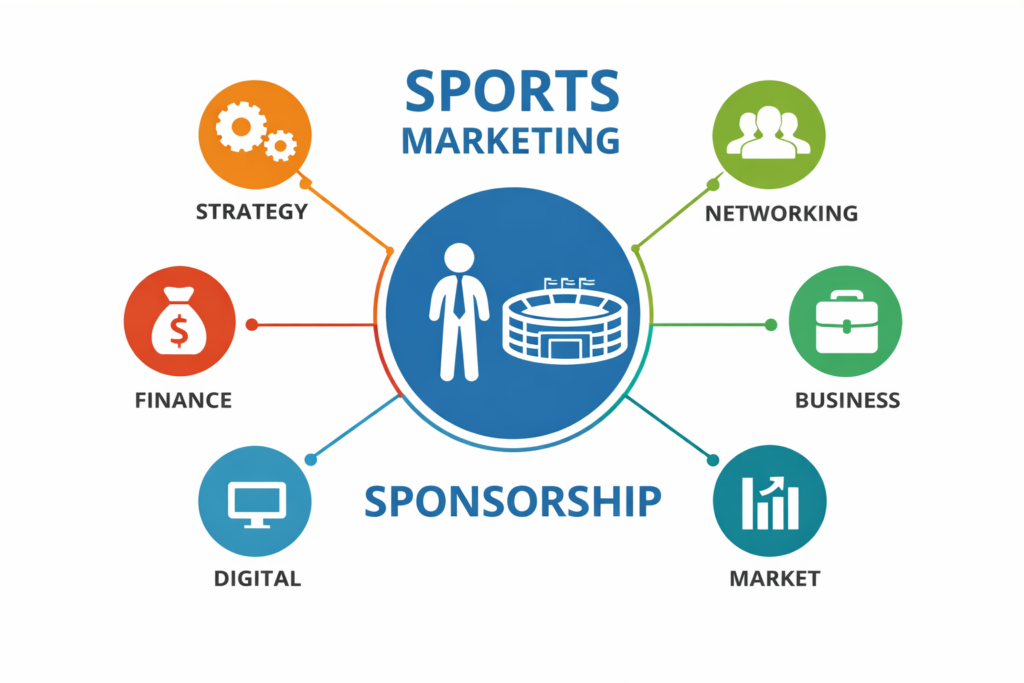
Sports Marketing The picture depicts a contemporary ecosystem of sports marketing comprising social media, apps, streaming, and fan analytics. The transition between the traditional and the digital brings out the ways in which the industry can also be creative in keeping the fans in focus. The future is expected to be centered on personalized and immersive digital experiences in order to make fans more engaged.
III. Social media role in FAN engagements.
Social media has altered the communication between the fans and sports marketing teams permanently, as it has established interactive forums that facilitate real-time communication. Social media such as Facebook, Instagram, Twitter, TikTok, and YouTube can be used by sports brands to create greater emotional engagement, loyalty, and dynamic communities of fans. This section examines social media in the context of fan engagement, its features, strategies, and examples in the real-life.
3.1. Relevant Platforms to reach the Fans.
All social media platforms connect with the fans differently, and teams adapt their methods:
Facebook: the most suitable one to build a sports marketing community with the help of groups, event pages, and live streaming.
Twitter: Ideal for instant updates, comments, and direct interaction between the fans and players.
Instagram: Specializes in visual content told by the use of pictures, reels, and behind-the-scenes.
TikTok: the application is used by younger generations and engages them in watching short, entertaining, virally popular videos.
YouTube: For content that is longer in length, such as highlights, interviews, and documentaries.
3.2 Real-Time Interaction
Social media allows real-time interaction, uniting fans with the action:
Live streaming: Fans will be able to follow live events and comment in real-time, such as the matches of the UEFA Champions League that were streamed on Facebook.
Live Tweets: Live commentary keeps the fans updated.
Question and Answer: The players and coaches may participate in the direct interaction via Instagram Live or Reddit AMAs (Ask Me Anything).
3.3 Building Fan Communities
Social media makes a person feel a sense of belonging, as it is interactive:
Teams: Superfans form teams to exchange ideas, knowledge, and memes concerning their favorite teams or players.
Hashtag Campaigns: Hashtag campaigns, such as the OneTeamOneDrea,m bring fans to unite around one theme in the global community.
Fan Contests: Fan contests encourage fans to make content, including the NBA Dunk Challenge on TikTok.
3.4 User-generated Content and its impact.
One of the areas of value fans add to the sports story is in the form of user-generated content